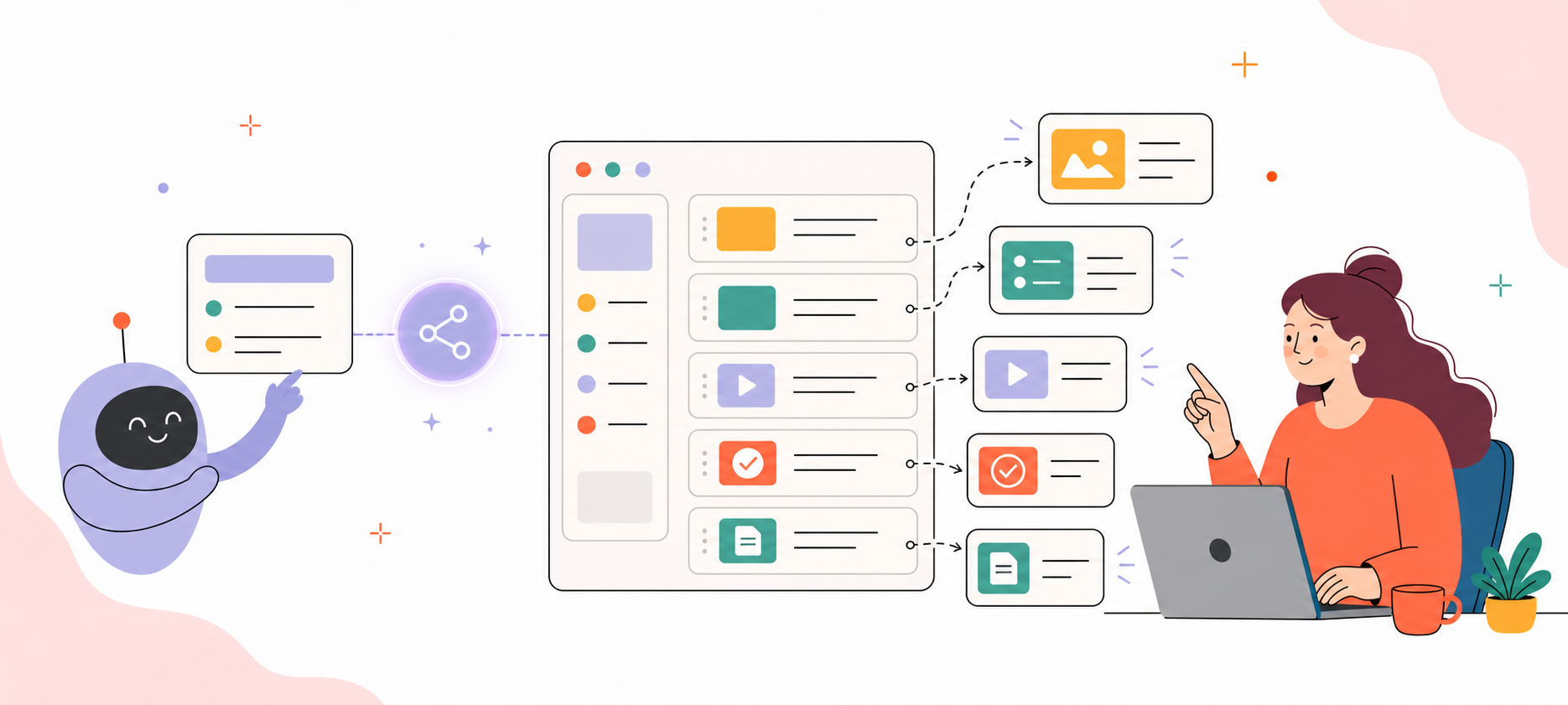
Currently, many businesses are adopting online training as an effective way to enhance the skills and knowledge of their staff, clients, and business partners. However, to achieve the best results in online training, it's essential to have an appropriate LMS. Don't make the mistake of sending links to your content through different means!
In this blog, we'll explore what an LMS is and why it's important for your training business. Additionally, we'll introduce the key features of a good LMS and provide practical tips for choosing, implementing, and using an LMS effectively.
Whether you're a small business training your clients or a large organization with a wide range of training programs, this blog is for you. So, if you're interested in improving the quality and effectiveness of your online training, keep reading and discover how an LMS can help you achieve your training goals.
What is a LMS
If you've come across this blog, it's because you've probably heard of the term LMS, but do you really know what it is? An LMS, short for "Learning Management System", is software used to manage and administer online training and learning. In other words, it's a tool that allows businesses to create, deliver, and monitor online courses for their employees or for a wider audience.
A typical LMS includes features such as course creation and organization, assignment and tracking of tasks, student assessment and grading, and report generation. Additionally, LMSs often offer a communication and collaboration platform for students and instructors, enabling real-time interaction through chats, forums, email, and video conferencing.
We could say that an LMS is a comprehensive and scalable software solution that allows you to offer quality online training that meets your needs and helps you maximize the efficiency and performance of your employees. Now that you know what an LMS is, keep reading to discover why it's important for your training business.
How does an LMS work?
Now that you know what an LMS is, it's important to understand how it works. In general, an LMS consists of three main components: the server, the database, and the user interface. Let's take a closer look at each one of them.
Firstly, the server is the central component of an LMS. It is the place where all courses, training materials, and student data are stored. The server handles all interactions between the LMS and users, and ensures that students have access to the correct content at the right time.
Secondly, the database is where all relevant data of the LMS is stored, such as student information, courses, and grades. The database is the key source of information for the LMS and is essential to ensure that content is delivered efficiently and that students can track their progress.
Lastly, the user interface is the part of the LMS that students see and interact with. It is the platform where students access courses, training materials, and assessments. The user interface may vary depending on the LMS provider, but in general, it should be easy to use and intuitive for students.
So, how does all of this work together? In general, LMS administrators create courses and add training materials to the server, while students access the user interface to view the content and complete assessments. The LMS uses the database to monitor student progress, store assessment results, and generate reports for administrators.
In other words, an LMS functions as a comprehensive platform that stores courses, training materials, and student data. Administrators create the content and students access it through an easy-to-use user interface. The LMS uses a database to monitor student progress and generate reports.
In the next section, we will delve deeper into the benefits of using an LMS for your training business.
Benefits of an LMS for your training business
An LMS can be a valuable tool for any training business, whether you're a small company or an independent trainer! Here are some of the key benefits of using an LMS for online training.
- Greater efficiency: An LMS can help improve the efficiency of your training process by eliminating the need for in-person training and reducing the use and management of multiple separate digital applications, thus improving the online learning experience and e-learning success.
- Cost savings: In-person training can be expensive, especially when considering travel time and logistics. Centralizing training content in an LMS can significantly reduce costs for the company or organization.
- Accessibility: A cloud-based LMS like Yeira means that users can access training courses from any device with an internet connection, making it easier for them to train from anywhere and at any time, increasing the flexibility and accessibility of the training.
- Personalization: An LMS can allow employees to customize their training experience according to their individual needs. This can include choosing which courses to take and the speed of the training, which can improve the effectiveness of the training.
- Evaluation and tracking: An LMS allows administrators to monitor employees' progress in real-time and evaluate their performance. Data reports and analysis can also help administrators identify areas for improvement and optimize the training process.
A LMS can provide your training business with a number of important benefits, such as increased efficiency, cost savings, accessibility, personalization, and evaluation. By using a LMS, you can improve the training of your clients and enhance the overall performance of your company. In the next section, we'll look at some key features to look for when choosing a LMS for your training business.
How to choose an LMS for your training business
Choosing the right LMS for your training business can be an overwhelming task, especially if you're a small business that trains your corporate clients and has a limited budget. Here are some useful tips to help you choose the right LMS for your needs:
- Determine your training needs: Before choosing an LMS, you should determine what your company's training needs are. Consider the type of content you need to provide, the number of users you'll have, and the features you want in an LMS.
- Look for a scalable LMS: If your company is growing, it's important to look for a scalable LMS that can grow with your business and adapt to your future needs.
- Compare different LMS options: Don't settle for the first LMS you find. It's important to compare different options to find the one that best fits your needs and budget.
- Check for cross-platform compatibility: It's important to look for an LMS that is compatible with a wide variety of devices and operating systems. This will ensure that your corporate clients can access the training from anywhere and at any time.
- Ensure high-quality technical support: Look for an LMS that offers high-quality technical support and customer service. This may include assistance with initial setup, technical support during daily use, and regular updates.
- Consider the cost: Cost is an important factor to consider when choosing an LMS. Make sure to look for an LMS that fits your budget and offers a good return on investment.
By considering these tips, you can find the right LMS for your training business. Remember that choosing an LMS is an important investment in your training business, so take the time to research and choose the best solution for your company.
Best Practices for Implementing and Using an LMS
Once you have chosen the right LMS for your training business, it's important to implement it effectively and make the most of all its features. Here are some helpful tips to assist you in implementing and using an LMS.
- Configure the LMS properly: Before starting to use the LMS, it's important to configure it properly. This can include loading content, creating user accounts, and customizing the platform.
- Provide adequate training to users: It's important to provide adequate training to the users who will be using the LMS. This can include training on navigating the platform, creating content, and managing users.
- Communicate the implementation of the LMS: Make sure to clearly communicate the implementation of the LMS to all involved users. This can include communication about implementation dates, LMS features and functions, and how to access the platform.
- Perform testing before launch: Before launching the LMS, it's important to perform thorough testing to ensure that everything works correctly. This can include user access testing, content testing, and integration testing with other tools.
- Make the most of LMS features: A good LMS offers a variety of features and capabilities that can help improve your company's training. Make sure to take advantage of all the available features, such as course creation, user management, and user progress tracking.
- Track user progress: It's important to track user progress in the LMS to evaluate training success. Use the available tools in the LMS to track user progress and assess the effectiveness of the training.
- Update content regularly: To maintain user interest in training, it's important to regularly update the content of the LMS. Make sure to add new content and update existing content to keep the training relevant and up-to-date.
You can find interesting: EXD Model: A novel framework to design effective e-learning experiences
Summary
An LMS is a valuable tool for any training business. From content management and centralization to user progress tracking, an LMS offers a wide variety of features and capabilities that can help you improve the training your company offers to stay competitive in the market.
Remember that it is important to choose an LMS that is suitable for your training needs, configure it correctly, and make the most of all the functionalities it offers. Additionally, it is important to keep in mind that proper implementation and use of the LMS are key to the success of your training business. By clearly communicating the implementation of the LMS to all involved users, tracking user progress, and regularly updating content, you can provide relevant and up-to-date training for your users and clients.
Yeira is a next-generation, cloud-based LMS that is ready to use and can help scale your online training business. Discover innovative tools here that can help you offer differentiated online learning experiences and achieve better results for your business.